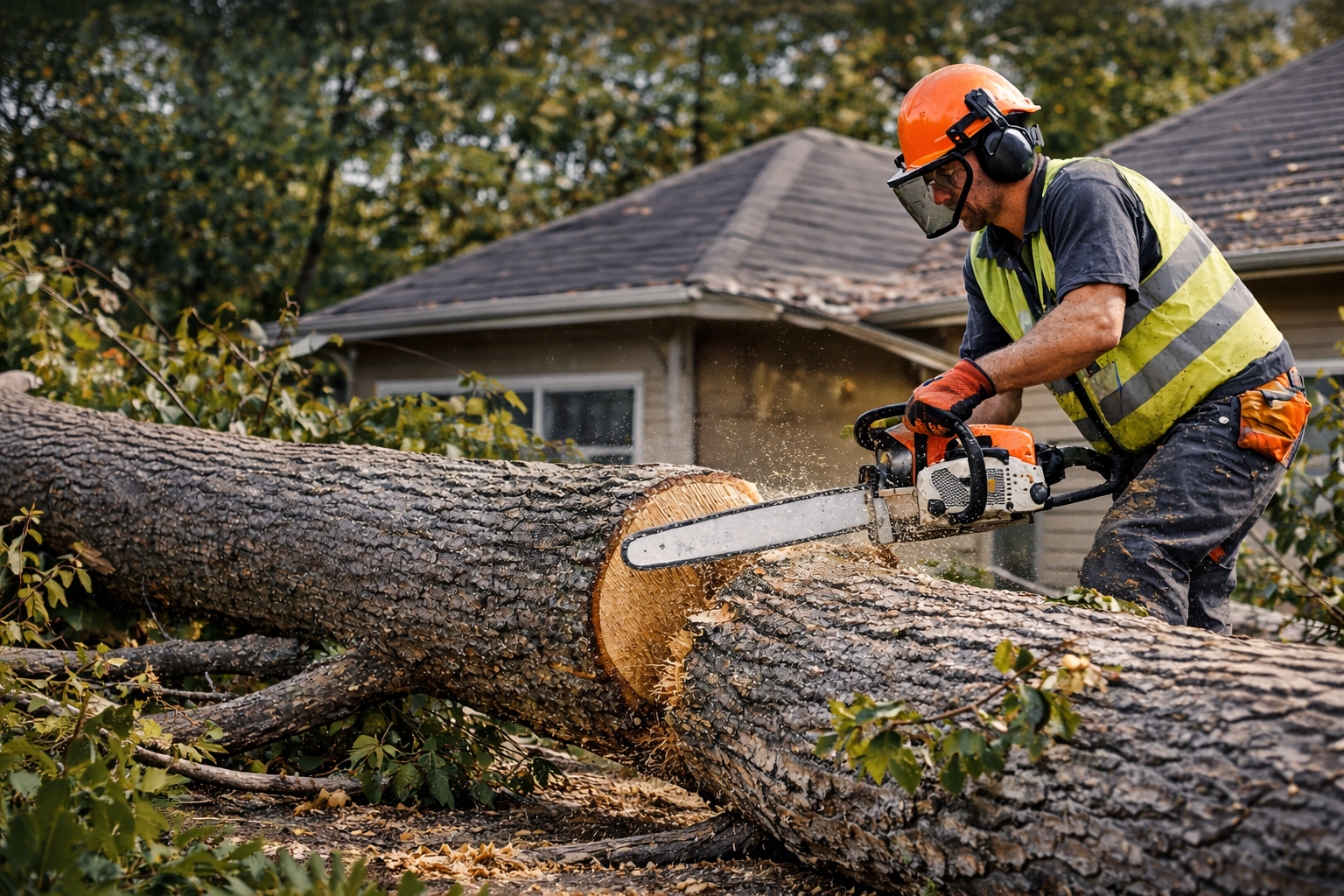
Worker cutting up a fallen tree with a chainsaw
Metro Atlanta • North Metro Atlanta

Tree Removal After Storm

Tree removal after a storm usually starts with immediate safety concerns: a blocked driveway, a tree on a fence or roof, hanging limbs, or unstable trunks that shifted in saturated ground. This page explains what homeowners should look for first and how storm cleanup jobs are commonly prioritized.

✅ Fast Response ✅ Safe & Professional ✅ Free Estimates ✅ Storm Damage Cleanup
📞 Call ✍️ Quote
Storm damage • North Metro Atlanta

What to check first after a storm

This page is for the stage after the weather passes and you are deciding what needs immediate removal, what can wait, and what to document before work begins. It is less about emergency dispatch and more about the order of decisions homeowners usually need to make.

Look for active hazards

  • Tree or limb on the roof, garage, or fence
  • Split trunks, uprooted bases, or hanging limbs
  • Driveway blockage or trapped vehicles
  • Anything near power lines or utility equipment
  • Fresh movement in saturated ground

Document before work starts

Take photos of the full tree, the damage path, nearby structures, and any blocked access so you have a clear record for estimates and insurance questions.

Immediate hazard?

If the situation is still dangerous right now, use the urgent storm page first.

Urgent Storm Help
Decision guide

When a storm-damaged tree usually needs removal

Major structural failure

If the trunk is split, the root plate lifted, or a large scaffold limb failed, removal is often the safer long-term option.

Loss of clearance

If the tree now leans over the roof, driveway, or main access route, the risk may have changed enough to justify removal even if it was previously manageable.

Repeated failure risk

Trees that failed once in saturated ground or lost large canopy weight may be more likely to fail again in the next storm cycle.

Cleanup only vs. removal

If the remaining tree is stable and the damage is mostly downed material, the job may be cleanup rather than full removal.

Planning the job

How post-storm work is usually prioritized

Safety first

The first visit may only stabilize the hazard, remove what is threatening the structure, or reopen access.

Cleanup second

Detailed debris pickup, haul-off, and cosmetic yard cleanup often happen after the high-risk work is complete.

Insurance documentation

Photos, estimates, and a clear scope of work are easier to organize when the damage is documented before cleanup changes the scene.

Related pages

For active storm hazards, use storm damage tree removal. If the main need is debris pickup and haul-off, visit tree damage cleanup.

After the weather

Common post-storm homeowner questions

Can this tree wait a few days?

Sometimes yes, but only if it is stable, off structures, and not threatening your access or nearby targets.

Should I clean up before getting a quote?

Usually no. It is better to document the full scope first so the estimate reflects the real damage.

Will the whole tree need to go?

Not always. Some post-storm jobs only require damaged limb removal and cleanup, while others reveal enough structural damage to justify full removal.

FAQ

Tree removal after storm FAQs

Most post-storm questions are about what to photograph, what can wait, and when cleanup turns into a full removal job.

What should I photograph before cleanup starts?

Capture the whole tree, the break point, the root area, nearby structures, blocked access, and any secondary damage to fences, roofs, or vehicles.

Can a crew clear the driveway first and finish later?

Yes. That is common after storms when restoring safe access is more urgent than finishing the full cleanup in one visit.

More answers

Removal vs. cleanup questions

How do I know if this is a cleanup job or a removal job?

If the remaining tree is unstable, split, uprooted, or still threatening something important, the work is usually more than simple cleanup.

Can I wait until insurance responds?

If the tree is stable and not creating an active hazard, sometimes yes. If it is threatening the structure or access, safety should come first.

Where can I compare general pricing?

You can review the broader tree removal cost in Atlanta page for pricing factors before requesting a site-specific quote.

Where should I start if the tree is still dangerous right now?

Start with storm damage tree removal or emergency tree removal for the urgent response path.